
Bertha, Falconwood Hospital, 1914
Age 14
Admission dates: July 1914 to September 1915
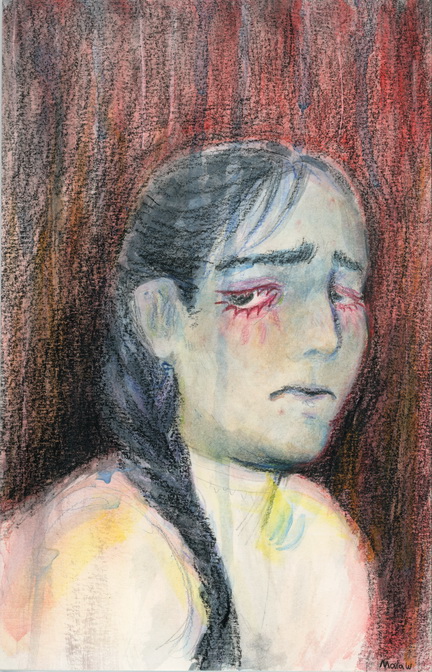
Bertha’s bare feet hit the hardwood floor with a repetitive dull thud. Her eyes watered. She wore a high-collared cream shirt and a long brown skirt that made it difficult to move quickly. Her long black braid bounced against her back. As she navigated down the long hall of the white doors, Bertha choked back a sob. She darted into a small room lined with six beds on either side. She flung her body onto the first one. Bertha began to cry. Her muffled groans grew louder and louder. Until Bertha began to whimper between sobs that she wanted to kill herself. That she would take poison and be done with it.
Bertha’s tears were momentarily interrupted as a figure dressed in white came into the room. It was one of the nurses. Bertha peeled her head from the pillow. The nurse shook her head and said, “Stop this nonsense—you have nothing to be sad about. Your life is well worth living.” Bertha returned her head to the pillow and sobbed even louder. The staff did not understand her; they always went on about how she was exaggerating. Being in this asylum made her feel so exposed, yet as was the case today, she felt unseen at the same time.
Institutional Context and Treatment
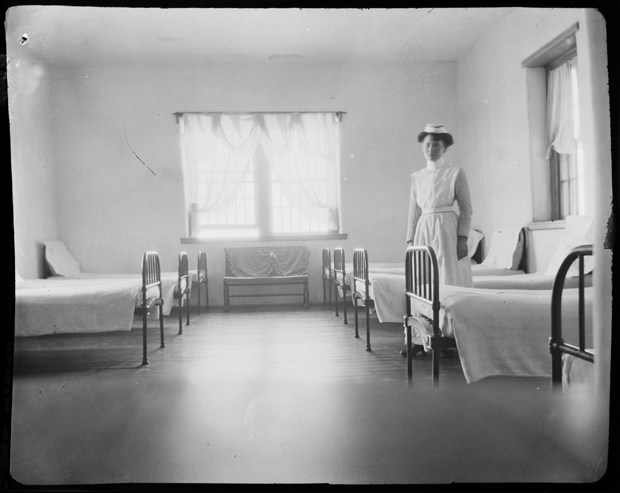
In July 1914, fourteen-year-old Bertha was admitted to the recently renamed Falconwood Hospital in Charlottetown, Prince Edward Island. She was the only child admitted that year and found herself on a ward full of much older women. The idyllic landscape and building were meant to create the basis for moral therapy, but almost no asylum in Canada could maintain their facilities between the demand for admissions and the limited funds available.
Moral therapy was the guiding philosophy for care. The goal was to improve humanity and to bring patients back to reason. Doctors were meant to have individual relationships with patients, the hospital itself pleasantly designed, and the population relatively small. Despite this, the institution suffered from overcrowding, a constant need for repair due to lack of funds, and inadequately trained staff, which meant this was never realized.
Adultism and Sanism
The limited records do not indicate if Bertha underwent any treatment. In large institutions, children were rarely given medical attention. Further, Bertha was not considered smart enough to be diagnosed with melancholy. Children were regularly labelled with eugenic terms and their emotions rarely taken seriously. Bertha’s sadness and desire to suicide were never interrogated from a wellbeing perspective, instead, the term ‘imbecile’ marked Bertha as mentally inadequate.
Presently, youth have expressed experiences of emotional dismissal from adults. In a series of letters from youth during the COVID-19 pandemic, teenaged research participants wrote to professionals. Many expressed feelings of being ignored, misunderstood, and powerless.