A Utopian Experiment Exhibit

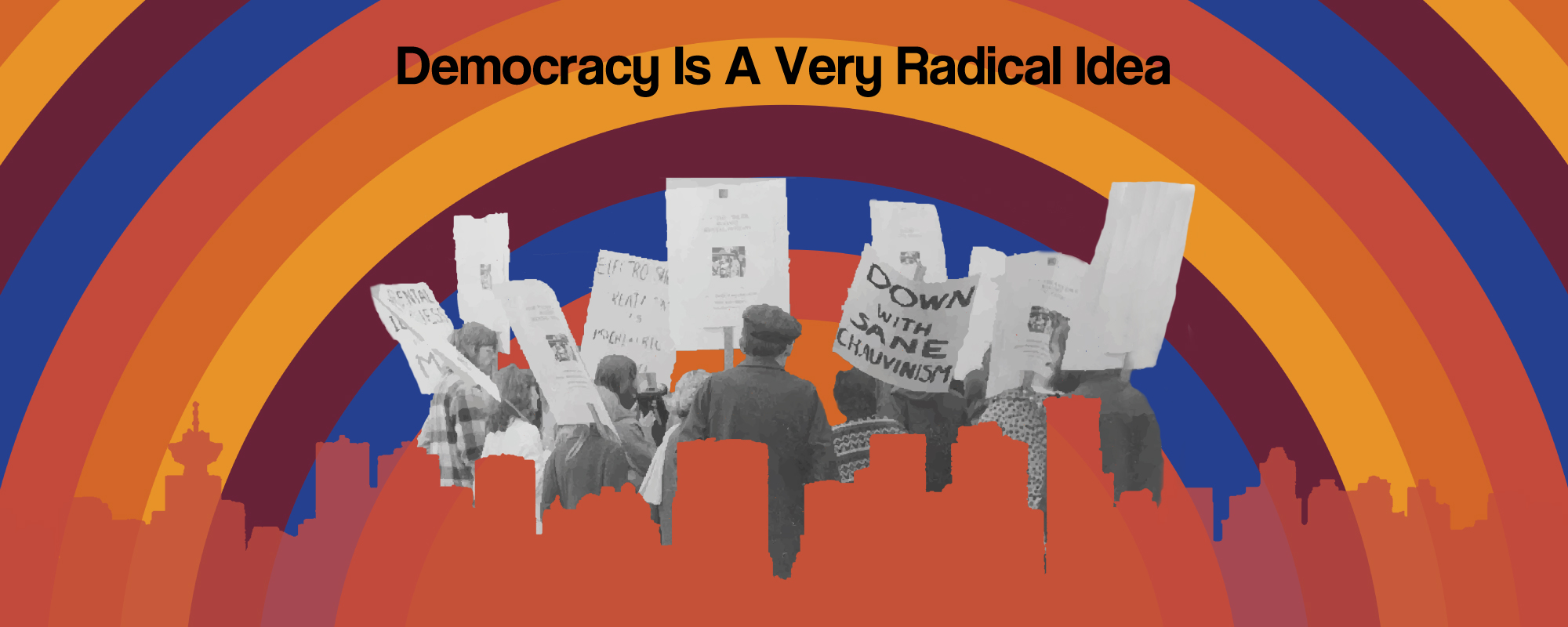
Meet these radicals and reconsider who could be in charge of the fate of mental health. Vancouver’s pioneering group MPA was Canada’ first democratic, peer-directed mental health organization. It inverted asylum hierarchies and put former patients and sympathetic lay supporters in charge. This exhibit includes a series of biographical sketches and case studies.

An Activist and an Academic Exhibit

Learn about a marriage of street smarts and scholarly skills, an impossible combination in the asylum era. Eugène Leblanc, director of an innovative Moncton support group, and Nérée St-Amand, professor of social work at the University of Ottawa, met in 1987. Sharing a savvy critique of the mental health system, they have been working together ever since.

Call Me Crazy

Call Me Crazy began with Irit Shimrat’s 1996 trans-Canada odyssey to gather the stories of key movement activists. Discovering that Shimrat still had the original cassette tapes from her interviews, After the Asylum had a selection of the archival recordings digitized, and asked the interviewees to share then and now photos and reflections on the current mad movement.

CMHA White Cross Centres Exhibit

Established in the deinstitutionalizaton era, White Cross Centres were meant to help discharged patients build a social life and gain skills for daily living. This exhibit is a compelling illustration of the inadequacies of an underfunded and underdeveloped community mental health system.

Crazymaking

Learn from Indigenous artists about how they understand mental health, informed by colonial legacies and the need to heal. Coming out of an important 2007 residency at Gallery Gachet, an dissident outsider arts space, the art – and the artists – speak to the experience of living in an in-between place shaded by past trauma and strengthened by cultural heritage.

Doreen Befus Exhibit

Acknowledge this woman’s patience, resilience, and personal courage in challenging medical and social labels of deficiency. Doreen Befus grew up in Alberta’s infamous Michener Centre, where she was sterilized without her knowledge or consent as part of the provincial eugenics program. Deinstitutionalized in the 1970s, she became a caregiver, an activist, and a writer.

Ernest Winch and New Vista Exhibit

Did community support for people experiencing mental health difficulties emerge only in the 1960s? Fully two decades earlier, BC provincial politician Ernest Winch established the New Vista Home for discharged female psychiatric patients. Visit this exhibit to learn about Winch’s early efforts to secure human rights for psychiatrized people, and meet four New Vista women as they struggle to make lives outside the institution.

Finding a Cultural History

Survivor culture is not art therapy, or stories solicited for public education. It is the cultural expression of a quest for justice. Explaining that making this exhibit transformed both her understanding of mad community and her own identity, curator Tracey Mitchell argues that the personal and the political are inextricably connected in survivor culture.

Legacies of MPA

Hosted by Vancouver’s Gallery Gachet in early 2018, Mad City presented the radical early life of MPA or the Mental Patients Association, a Kitsilano fixture in the 1970s, inviting visitors to imagine a mental health world where hierarchies were inverted and people with psychiatric diagnoses were empowered to create and run the support services they needed.

Maladjusted

Meet a theatre crew who made their audience map out a way to humanize our broken mental health system. In 2013, Vancouver’s Theatre for Living launched Maladjusted, a production that crafted fictional scenarios from the lived experiences of cast members, using the stage as a platform to rehearse progressive changes to the current psychiatric regime.

Marguerite-Marie

Were people in long-stay psychiatric institutions really shut off from the world? The life of Marguerite-Marie, resident of Montreal’s Saint-Jean-de-Dieu Hospital from age 12, shows that this was not always the case. Family letters provide a glimpse into Marguerite-Marie’s daily activities, her dreams and desires for her life outside of the asylum, and the maintenance and nurturing of familial ties.

Museum of the Mind

The Museum of the Mind in Haarlem, the Netherlands, is a public repository of psychiatry’s past that speaks with purpose to mental health today, drawing the visitor in as an active participant and storytelling, history, art, and past-present-future paradigms to challenge current ideas and practices in mental health.

Shrink Resistant

Shrink Resistant, recalls a time when there was a zeitgeist to make the hidden public, and for the disempowered to unit and take political action. Edited by Torontonians Bonnie Burstow and Don Weitz, the book was published in 1988 by New Star, Vancouver’s venerable left wing press. This was English Canada’s first collective representation of psychiatric survivors.

Still Sane

Imagine encountering an exhibit of female figures, whose faces and bodies were inscribed with tales of psychiatric torture? This was Still Sane and the year was 1984. Fast forward twelve months, and Vancouver’s Press Gang publishers produced the book, taking the show’s feminist, lesbian and mad politics to a much wider audience.

The Asylum Project

The Asylum Project, the idea that neurodiverse people were sick and needed long term residential care, was an optimistic idea that ended in far-reaching failure. Visit architect Arthur Allen’s careful examination of the sites, buildings, and grounds of Western Canadian asylums and the lives of patients who lived there.

The Politics of Art at PARC

This exhibit takes you inside the unique experiment that is PARC, Toronto’s Parkdale Activity and Recreation Centre. Born in 1980 as a drop-in centre offering basic services to former psychiatric patients, PARC evolved to provide employment, to advocate on issues of poverty, mental health and homelessness, and to become a vital neighbourhood institution.

The Inmates are Running the Asylum

The Inmates Are Running the Asylum is a 36-minute historical documentary about the MPA (Mental Patients Association), Vancouver’s most radical and successful mental health group. A compilation of interviews clips, animation, vintage footage, and original music, this provocative, passionate and engaging film speaks to social justice, community-building and mental health today.

Toronto Activists

Mad Activism in Toronto began in the 1970s. Inspired by a visit to the MPA in Vancouver, Don Weitz established the Ontario Mental Patients Association (soon renamed On Our Own) in 1977. On Our Own would survive 20 years, operating a drop-in and a store called The Mad Market, and stimulating the publication of the well-known anti-psychiatry magazine called Phoenix Rising: the Voice of the Psychiatrized.

Category: Exhibits, Mad Cities